
■ A BOOK BY ROBIN CARHART-HARRIS
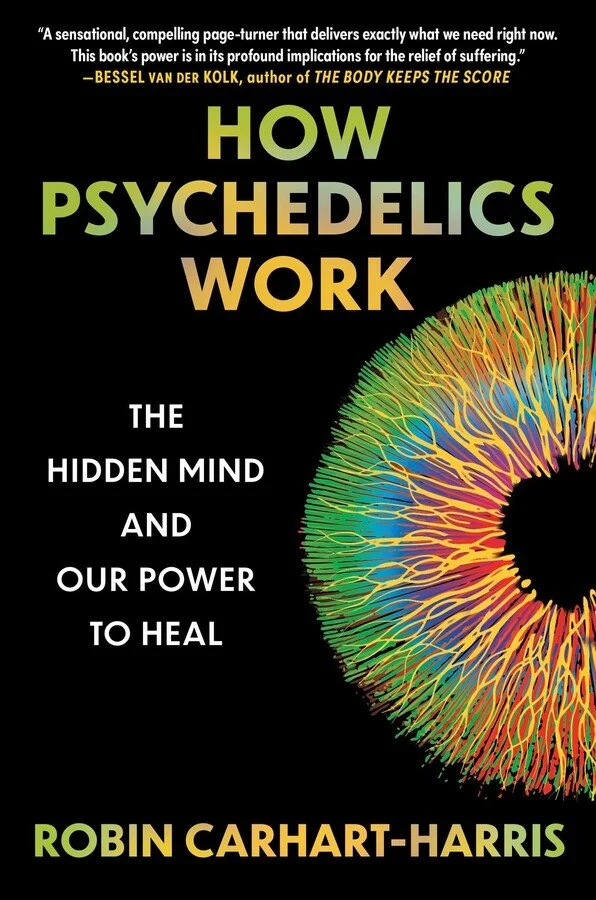
How
Psychedelics
Work
Illuminating the hidden mind
Dr. Robin Carhart-Harris, leading figure in psychedelic neuroscience, opens up the brain on LSD, psilocybin, MDMA, and DMT — tracing the mechanisms behind some of the mind's most transformative states, with scientific rigor and unusual clarity.
"A sensational, compelling page turner."
—Bessel van der Kolk, author of The Body Keeps the Score

Raves and Reviews
■
■
"Robin Carhart-Harris has played a singular role in shaping the modern scientific conversation about psychedelics. In this carefully written book, he brings the creativity and conceptual daring that have made him one of the field’s most influential voices, offering a thought-provoking exploration of mind, brain, and therapeutic change."
—Rachel Yehuda, Director of the Traumatic Stress Studies Division at the Icahn School of Medicine at Mount Sinai
"Robin Carhart-Harris is currently the foremost neuroscientist in psychedelic studies, and this page-turner delivers exactly what we need right now: a compelling, evidence-respecting map of how psychedelics may function as 'codebreakers' for stuck self-states. Temporarily loosening rigid mental grooves through increased plasticity and measurable brain-network shifts, trauma and depression can be processed rather than merely suppressed.
This book’s power isn’t just its solid neuroscience, but even more: its profound implications for the relief of suffering. Psychedelics in and of themselves aren’t magic fireworks; set/setting and therapy are critical. Failure to guarantee safety can turn a high-potential intervention into lasting harm. From its deep attention to ego dissolution and embodied suffering, to its careful discussion of outcomes in depression and beyond, this synthesis makes a persuasive case that modern medicine is overdue for a new, relational, evidence-based way to relieve suffering—one that restores meaning-making, acceptance, reconnection, and long-term adaptability."
—Bessel van der Kolk, author of The Body Keeps the Score
"A personal and insightful read."
—Dr. Helen S. Mayberg, MD
"Psychedelic medicine is opening an extraordinary new frontier in our understanding of the mind and our innate capacity to heal. Robin Carhart-Harris, one of the field’s most rigorous and visionary pioneers, shows how these remarkable compounds may help us break free from the patterns that keep us trapped—and rediscover meaning, connection, and wholeness. Scientifically grounded, deeply humane, and refreshingly clear, How Psychedelics Work is essential reading for anyone interested in the future of mental health."
—Mark Hyman, MD. 16x New York Times bestselling author, Co-founder and Chief Medical Officer, Function Health