CANOPY

(Cohort Assessing for Naturalistic Use of Psychedelics)

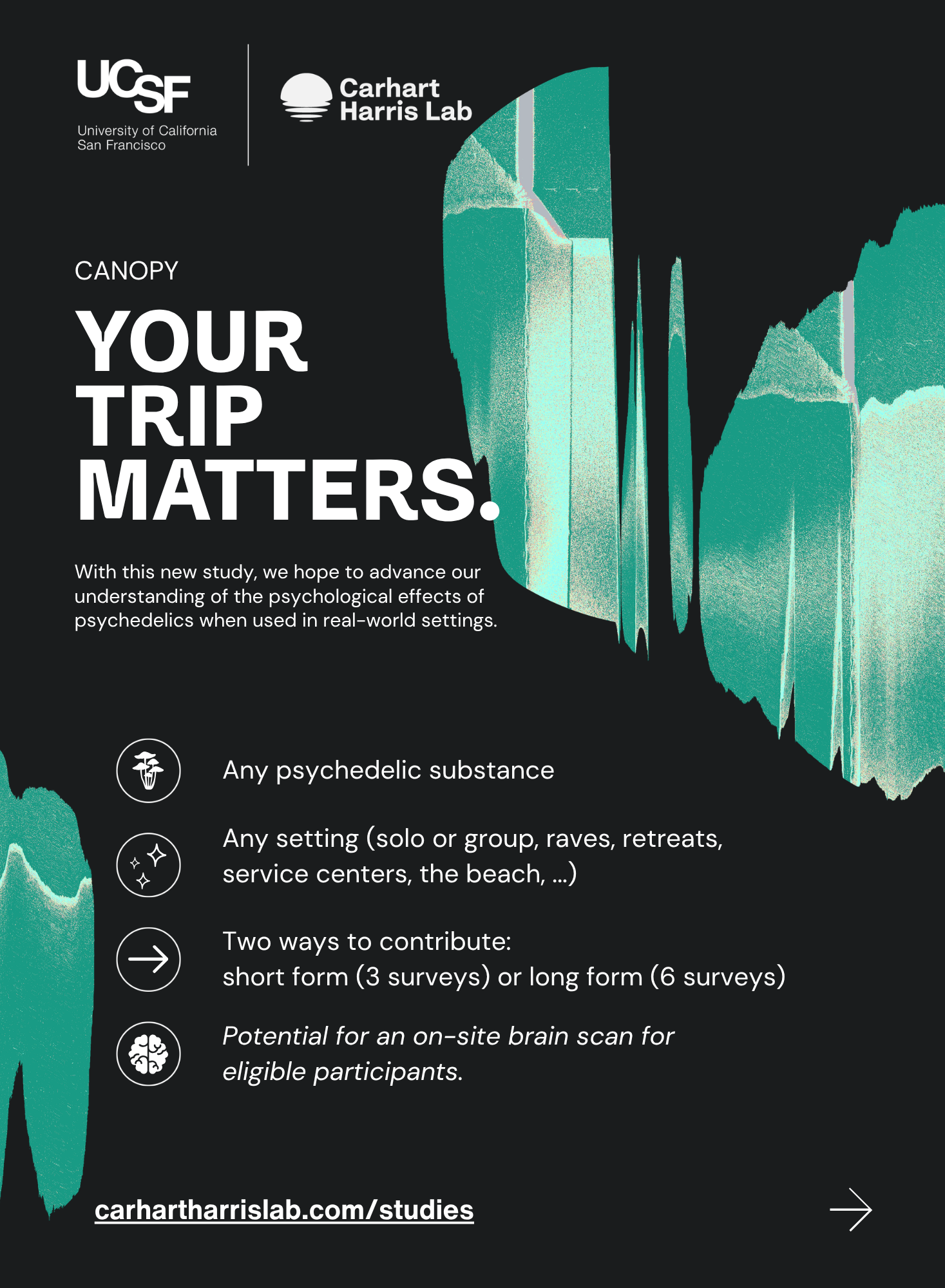
A research initiative to advance the understanding of the psychological effects of psychedelics.

CANOPY PROJECT INTRO

Psychedelic use is becoming more common, and not only because of changes in the law. It is therefore important that we understand how this use affects people. CANOPY is a research platform that follows people over time as they use psychedelics in the real world, across different settings, populations, and reasons for use. CANOPY looks at what happens when people use psychedelics outside the laboratory: in homes, retreats, festivals, and service centers, which is where most use occurs and where policy decisions are increasingly being made.

It captures data from these real-world settings, at a scale laboratory studies cannot reach, while still following people forward in time under a rigorous, structured protocol. Because every sub-study enrolls people and measures outcomes in the same way, CANOPY acts as a shared backbone that many different research and policy projects can build on. The result is a source of evidence for reducing risk and guiding policy on psychedelic use.

WHAT WE MEASURE

Using standard, well-validated questionnaires, we track the following over time:

• Mood, anxiety, and psychological distress
• Wellbeing and quality of life
• Sleep, pain, and daily functioning
• Substance use patterns
• Social connectedness
• Insight and meaning
• Adverse events and challenging experiences
• Condition-specific changes in symptoms tailored to each participant

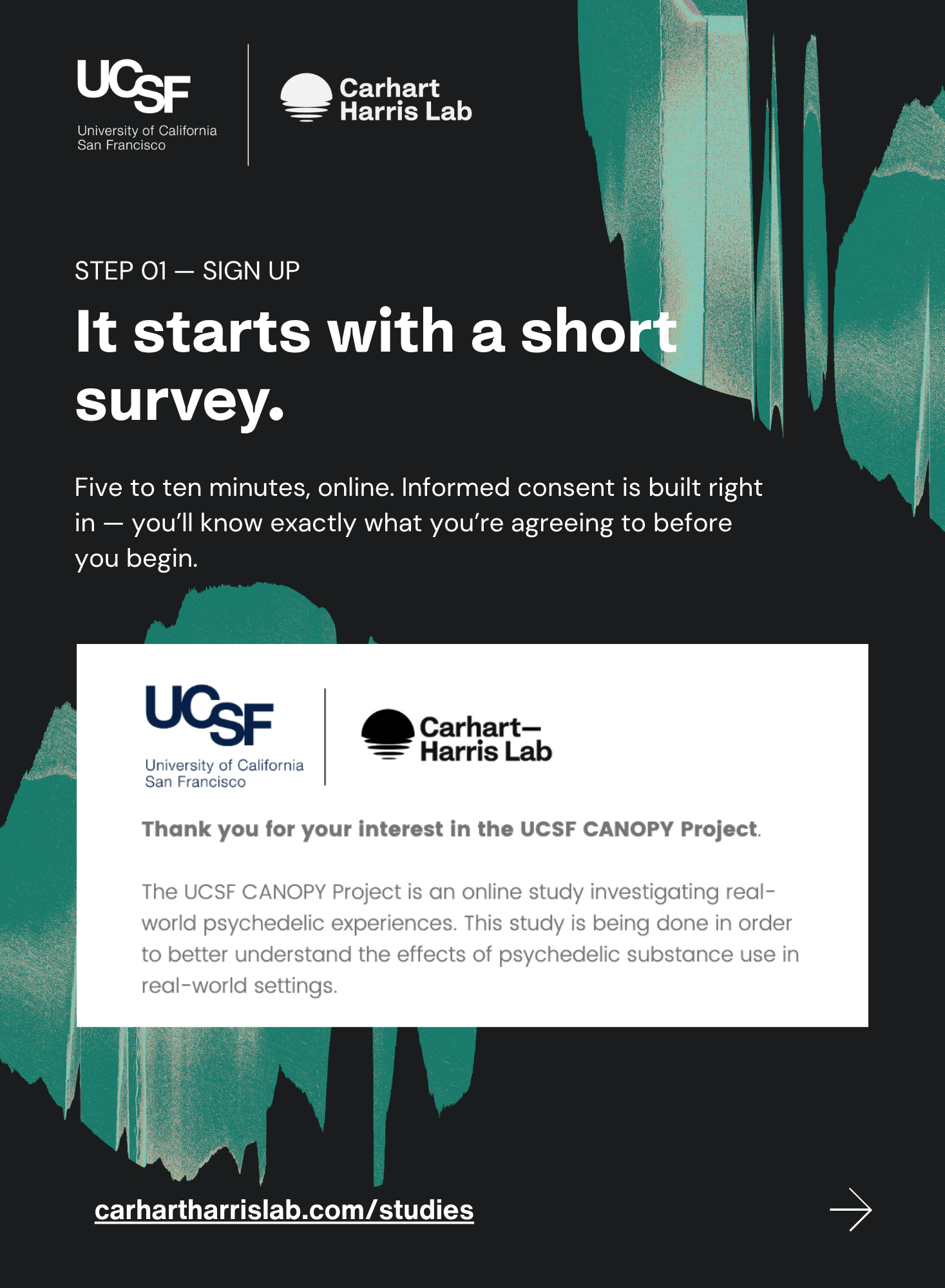
Participants enroll before their session through a QR code or link and provide a planned dosing date, which they can update as plans change. The system then delivers surveys automatically, timed around each participant's dosing date. It runs on Qualtrics, a HIPAAcompliant platform that supports this automated, date-anchored delivery.


Participants enroll before their session through a QR code or link and provide a planned dosing date, which they can update as plans change. The system then delivers surveys automatically, timed around each participant's dosing date. It runs on Qualtrics, a HIPAAcompliant platform that supports this automated, date-anchored delivery.

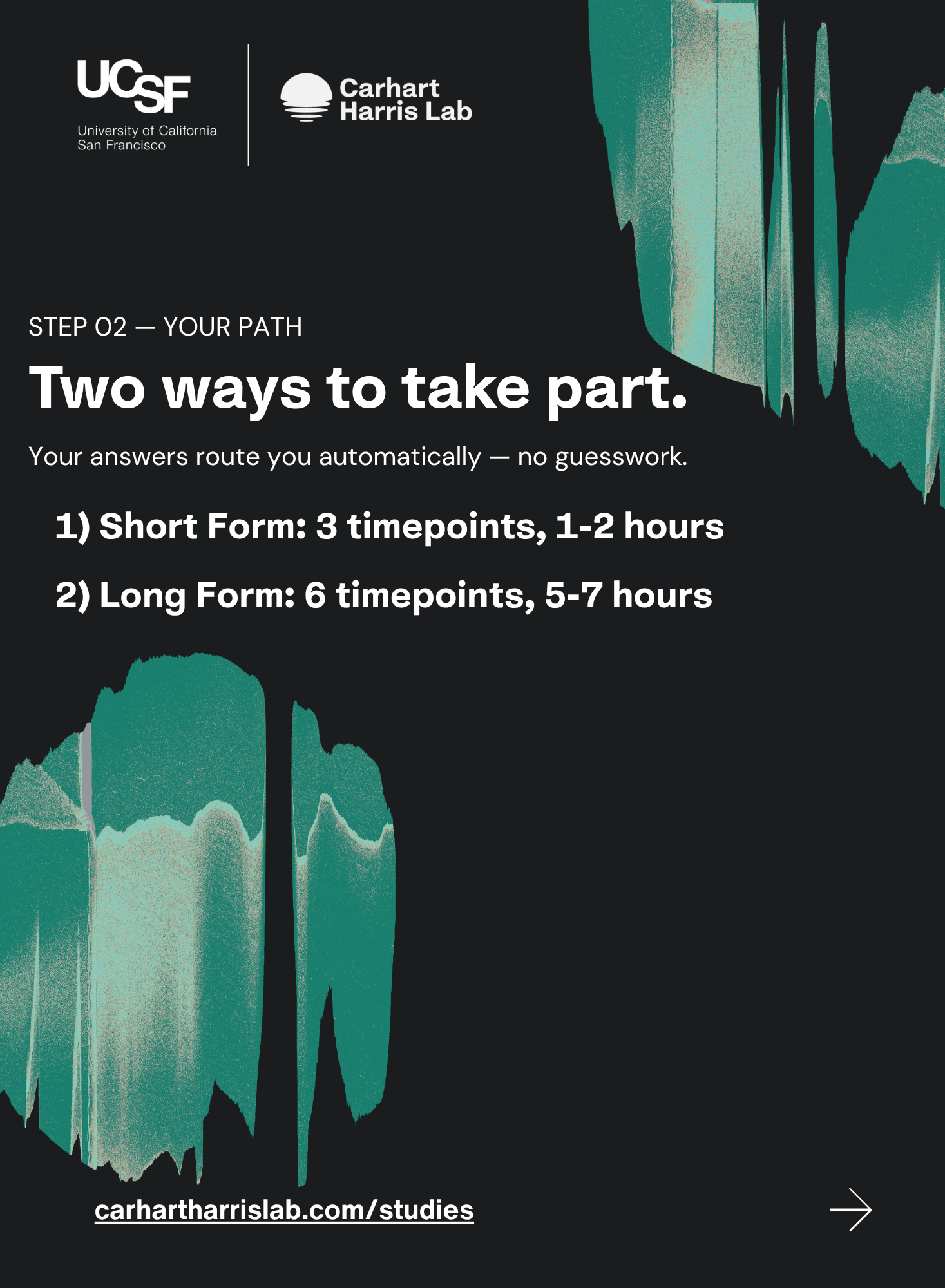
Participation follows one of two tracks:

SHORT FORM

Three check-ins spanning roughly two weeks before dosing through four weeks post-experience.

LONG FORM

Six check-ins from 1 week before to six-month post-experience. We add more detailed, clinically validated assessments based on the participants’ responses tailoring the data we collect to each person’s health profile.

INTEGRATED STUDIES

CANOPY is the overarching project, with several sub-studies operating under it:

■ Bay Area Brains (BABS)

Alongside the survey data, participants in cohorts of particular interest can opt into BABS, which measures how the brain and body change around a psychedelic session. We collect brain scans (fMRI) before and after the session, provide a wearable brain-activity monitor (EEG) for use during the session, and collect blood and saliva at baseline and follow-up.

Participants also wear an Oura ring from baseline through follow-up to track sleep, heart rate variability, resting heart rate, activity, and sleep cycles. Currently we are enrolling firsttime psychedelic users, and we can extend the study to other groups of interest in the future.

What we collect in BABs

• Brain scans (fMRI), before and after the session, capturing three things: how different brain regions communicate, the brain's structure (such as cortical thickness and gray-matter volume), and the integrity of the brain's wiring (its whitematter connections).

• Brain activity during the session, via an optional take-home wearable EEG device, for participants who choose to use it.

• Sleep and body signals, tracked continuously with an Oura ring: sleep quality, heart rate variability, resting heart rate, activity, and circadian rhythm.

• Biological samples: blood and saliva at baseline and follow-up, plus a urine drug and pregnancy screen at the baseline visit.

• Psychological measures, using validated questionnaires on wellbeing, emotional processing, integration, and the quality of the acute experience.

■ Ibogaine Bay Area Brains (iBABS)

Ibogaine is a naturally occurring compound whose effects on the body and brain set it apart from classical psychedelics. We plan to work with ibogaine providers to recruit healthy Bay Area locals who are already planning to travel for ibogaine therapy.

Amongst those who travel for ibogaine therapy many live with a persistently overactive stress response, emotional flatness, and disrupted sleep. Anecdotal reports indicate that people without a particular diagnosis that are seeking to address still report broad improvements across several areas of life that last weeks to months after a single session. No systematic before-and-after brain-imaging dataset exists for ibogaine's effects in nonclinical populations. iBABS is designed to fill that gap.

What we collect in iBABs

iBABS collects everything in BABS, with two additions:

• A 7-minute resting-state EEG (dry-cap device), recorded before and after the session for participating providers.

• Phase 2: Stool samples for gut-microbiome analysis, an exploratory measure intended to inform future research.

■ ORCHID

State-regulated psilocybin programs give us a way to evaluate the economics of psychedelic care today. The programs in Oregon and Colorado provide a U.S.-based, realworld setting. In partnership with UC Berkeley's Collaborative for the Economics of Psychedelics and the Sheri Eckert Foundation, we will collect healthcare data anchored to each participant's session date to assess whether it saves the health system money.

ORCHID has ethics board (IRB) approval and is ready to launch once funded. With participants' consent, we will connect their actual medical billing records to their CANOPY survey answers, working with a major healthcare-data aggregator (IQVIA or Komodo Health) that holds records for over 310 million Americans and can match individuals with more than 90% accuracy.

ORCHID will be the first study to track objective changes in healthcare data before and after psychedelic care, link their experience to real medical records, and show whether it saves the health system money, years before any other pathway could deliver this evidence.

RECRUITMENT

Recruitment grows through partners, including retreats, service centers, and community organizations, and through direct outreach to individuals via online advertising and local events. Provider partners do not handle consent, data, or follow-up, which keeps their burden low and maintains clear regulatory boundaries.

PRINCIPAL INVESTIGATOR

Robin Carhart-Harris, PhD Internationally recognized leader in psychedelic neuroscience and creator of the REBUS and Entropic Brain models, two influential theories of how psychedelics act on the brain.

He was principal investigator of the first modern psilocybin trials for treatment-resistant depression and major depressive disorder, the first LSD brain-imaging study, and pioneering combined EEG and fMRI datasets. He has over ten years of experience running real-world, follow-people-forward studies of psychedelic use, resulting in dozens of peerreviewed publications.